Guides · 6 Oct 2026 · 3 min read
How inflation affects your money (and what you can do about it)
Inflation quietly shrinks what your money can buy. Here's how it's measured, why it happens, how it hits savings, debt and investments, and the practical ways to protect yourself.
The short answer
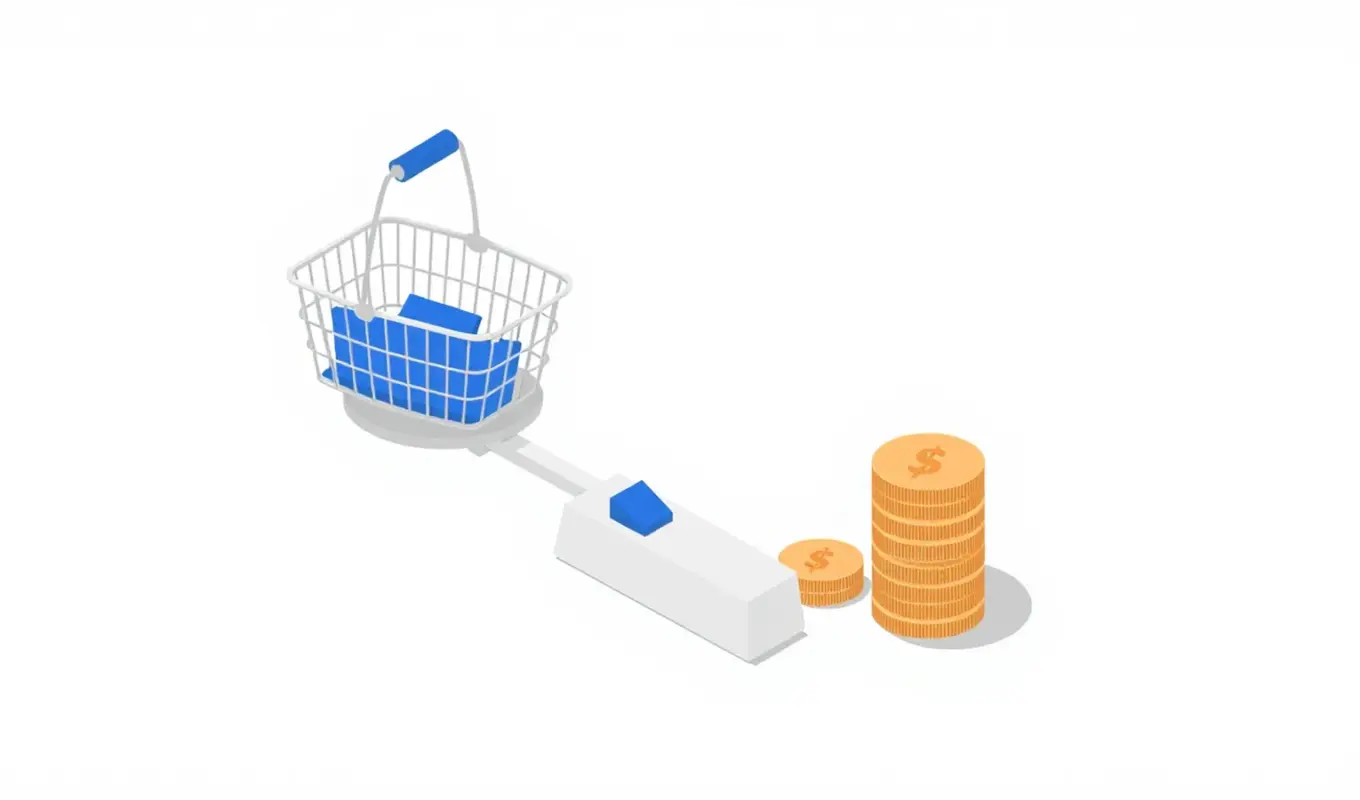
Inflation is the rise in prices over time, which reduces how much each unit of money can buy. At 3% inflation, $100 buys only about $74 worth of today's goods after 10 years. It erodes cash savings that earn less than inflation, makes fixed debts cheaper in real terms, and tends to push interest rates up, which affects both bonds and stocks.
Key takeaways
- Inflation means the same money buys less over time.
- What matters is your real return: interest or investment return minus inflation.
- Cash earning below inflation is losing value, even if the balance never falls.
- Central banks raise interest rates to fight inflation, which ripples through loans, savings, bonds and stocks.
Your bank balance can stay exactly the same while your money quietly becomes worth less. That’s inflation. Understanding how inflation affects your money helps you make better choices about saving, borrowing and investing.
What is inflation?
Inflation is the general rise in prices over time. When inflation is 3%, a basket of goods that cost $100 last year costs about $103 this year. Put another way, each dollar buys a little less.
It compounds just like interest does. At 3% a year:
| Years | What $100 of today’s goods will cost | What $100 in cash will buy |
|---|---|---|
| 5 | $116 | about $86 of today’s goods |
| 10 | $134 | about $74 |
| 24 | $203 | about half |
That last row follows the Rule of 72 from our guide to compound interest: 72 ÷ 3 = 24 years for prices to double.
How is inflation measured?
Most countries track inflation with a Consumer Price Index (CPI): statisticians price a fixed basket of goods and services (food, housing, transport, healthcare, energy and more) every month and measure the change. In the United States, the Bureau of Labor Statistics publishes CPI; in the eurozone, Eurostat publishes the HICP.
You’ll also hear about core inflation, which strips out volatile food and energy prices to show the underlying trend. Central banks watch both closely.
Your personal inflation rate can differ from the official number. If rent and groceries make up most of your spending and those prices rise faster than average, you feel more inflation than the headline figure suggests.
Why does inflation happen?
Economists usually point to three causes:
- Demand-pull: spending grows faster than the economy can produce goods and services.
- Cost-push: producers face higher costs (energy, raw materials, wages) and pass them on.
- Expectations: if businesses and workers expect higher prices, they set prices and wages accordingly, which can make inflation self-reinforcing.
Most central banks target about 2% inflation, a level considered low enough not to distort decisions but high enough to avoid the risks of falling prices.
How does inflation affect your savings?
The key idea is your real return:
Real return ≈ interest rate − inflation rate
If your savings account pays 1% and inflation is 3%, your real return is about −2%: your balance grows, but its buying power shrinks.
What to do:
- Keep your emergency fund in an account that pays a competitive rate, such as a high-yield savings account.
- Don’t hold more cash than you need for emergencies and near-term goals.
- For long-term money, consider investments that have historically outpaced inflation.
How does inflation affect debt?
Fixed-rate debt (such as a fixed-rate mortgage) can become easier to carry. Your payment stays the same while wages and prices rise, so it takes up a smaller share of your income over time.
Variable-rate debt works the other way. Central banks usually respond to high inflation by raising interest rates, which pushes up costs on credit cards, variable mortgages and many loans. If inflation is high, paying down variable-rate debt becomes more valuable. Our guide to debt avalanche vs snowball can help prioritize.
How does inflation affect investments?
- Bonds: fixed interest payments lose real value, and rising interest rates push existing bond prices down. See stocks vs bonds.
- Stocks: companies can often raise prices, so over long periods stocks have historically outpaced inflation. In the short term, high inflation and rising rates can hurt share prices, especially for fast-growing companies. Our guide to how interest rates affect stocks explains why.
- Inflation-linked bonds (such as US TIPS) adjust their value with inflation, offering direct protection.
- Real assets such as property and commodities have sometimes held value during inflationary periods, with their own risks.
How can you protect yourself from inflation?
- Know your real rate. Compare what your savings earn with current inflation.
- Hold the right amount of cash — enough for safety, not much more.
- Invest long-term money in a diversified mix rather than leaving it in cash. See how to start investing.
- Lock in fixed rates on borrowing when it makes sense, and reduce variable-rate debt when rates are rising.
- Grow your income. Asking for raises in line with inflation matters more than most budgeting tricks.
- Review your budget when prices change. Our guide to making a budget shows a simple approach.
The bottom line
Inflation is a slow, steady tax on cash. You can’t control it, but you can manage its impact: earn a competitive rate on savings, keep high-interest debt down, and give long-term money a chance to grow faster than prices.
This guide is general information, not personal financial advice.
Frequently asked questions
What causes inflation?
Usually demand growing faster than supply (too much money chasing too few goods) or rising costs for producers, such as energy or wages, that get passed on to consumers. Expectations matter too: if people expect prices to rise, they may spend and negotiate wages accordingly.
Is some inflation good?
Many central banks, including the Federal Reserve and the European Central Bank, target about 2% a year. Mild, predictable inflation is considered healthier than falling prices (deflation), which can make people delay spending and deepen downturns.
Does inflation help people with debt?
Fixed-rate debt becomes easier to repay in real terms when wages and prices rise, because the amount owed doesn't grow with inflation. Variable-rate debt can get more expensive if central banks raise rates to fight inflation.
What is the difference between CPI and core inflation?
CPI measures price changes across a broad basket of consumer goods and services. Core inflation excludes volatile food and energy prices to show the underlying trend more clearly.
Sources: U.S. Bureau of Labor Statistics — Consumer Price Index, Federal Reserve — Monetary policy, European Central Bank — Inflation and price stability